

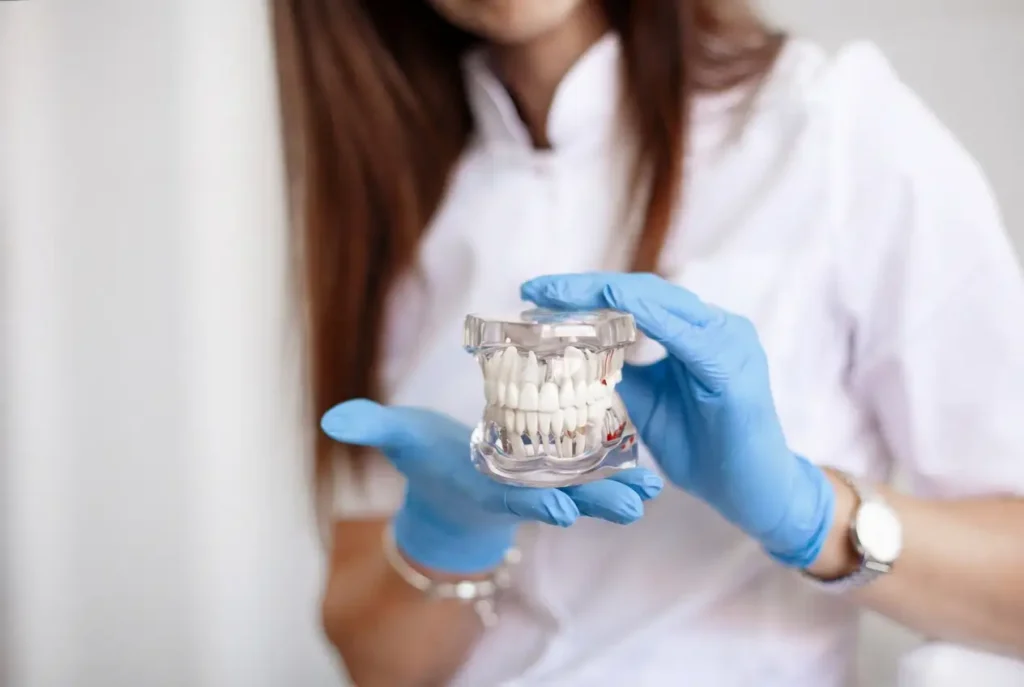
Full mouth rehabilitation can rebuild an uneven bite by planning the shape, height, and position of the teeth as one connected system, then restoring them in an order that keeps the bite balanced. It is used when many teeth need work at once.
An uneven bite often develops slowly, as wear, repairs, and replaced teeth change how the upper and lower teeth meet. Knowing how a plan comes together helps set expectations and shows why the work is planned as a whole instead of tooth by tooth.
How Years of Dental Work Can Change a Bite
Occlusion is the term for how the upper and lower teeth fit together. Each crown, filling or missing tooth can change that fit slightly, and the changes add up when work is done one tooth at a time.
Wear matters too. Grinding or acid can shorten teeth over time, which lowers the height of the bite, known as the vertical dimension. A multiple crowns bite problem can follow when some teeth meet first while others barely touch.
Signs the Bite May Need a Broader Plan
These signs do not prove that a full plan is needed, but they are worth having checked, even when nothing hurts. Chewing may feel easier on one side than the other, and crowns or fillings may feel high or keep chipping.
Front or back teeth may look worn down or shorter than they used to, and the jaw muscles may feel tired or sore, especially in the morning. Needing repeated repairs on the same teeth is another sign.
Steps in a Full Mouth Rehabilitation Plan
Planning for a full mouth reconstruction bite moves from gathering information to testing the new bite. Photos, X-rays, scans and bite records show how the teeth and jaw work together, and a plan sets the order of treatment.
Decay, gum disease or damaged teeth are treated first so the foundation is healthy. Temporary restorations are often used to try out the new bite, and final crowns, bridges or implants follow once adjustments are made. Each stage is reviewed before the next.
Restorations That Can Work Together
Complex restorative dentistry often combines several treatments in one plan, so the pieces are chosen to fit together. Crowns and bridges rebuild worn or damaged teeth, and implants can replace teeth that are missing.
Bonding or veneers may reshape smaller areas. Using them together, with the bite as the guide, helps the final result chew comfortably in daily life and look consistent from tooth to tooth.
Restorative Care at Advanced Family Smiles
At Advanced Family Smiles in Philadelphia, PA, we offer crowns and bridges, dental implants, and full and partial dentures for patients in Philadelphia. We use iTero and CBCT scanners, which capture digital impressions and 3D images of the teeth and jaw.
Dr. Yoel Calzada-Sanchez, Dr. Elena Sanchez, Dr. Krupa Patel, and Dr. Dilip Dudhat are among our dentists. After an exam, we explain whether an uneven bite needs one crown or a broader plan, which options could fit, and how they would be sequenced.
Frequently Asked Questions
How does severe tooth wear change the vertical dimension of the bite?
Severe wear shortens the teeth, which can lower the height of the bite. Restorations can rebuild the lost length and restore that height, though how much is changed is planned carefully for each person.
When is orthodontic treatment recommended before restorative work?
Orthodontic treatment may be suggested when crowding or tilted teeth would limit how well crowns, bridges or implants fit. Moving the teeth first can create a more even foundation for the restorations that follow.
How are cosmetic goals balanced with chewing function?
Appearance and chewing both depend on tooth shape, length and position, so the plan aims to satisfy both. When a cosmetic wish would strain the bite, we adjust the design so the result still chews comfortably.
Why is bite analysis important before several crowns are made?
Bite analysis shows how the upper and lower teeth meet before new crowns are made. Without it, a crown can sit too high or shift pressure to neighboring teeth, which may cause chipping or discomfort.
How do temporary restorations help before final crowns are made?
Temporary restorations let the new bite be tried out before the final ones are made, so height, comfort, and chewing can be checked. We can adjust the design at that stage before the permanent restorations are placed.
Planning Full Mouth Rehabilitation in Philadelphia, PA
Full mouth rehabilitation for an uneven bite is planned as one connected system, and the right scope depends on the person. Patients in Philadelphia are welcome to ask our team at Advanced Family Smiles how each tooth fits into the overall bite.